

OET teaching

The Occupational English Test (OET) is specifically designed for healthcare professionals who need to demonstrate their English proficiency to work in medical environments. Unlike general English proficiency tests, OET focuses on medical terminology, patient interactions, documentation writing, and real-life healthcare scenarios.
Introduction

Teaching Plan for OET (Occupational English Test)

A well-structured teaching plan is essential to help students master OET’s language demands, refine their communication skills, and excel in all four modules: Listening, Reading, Writing, and Speaking.
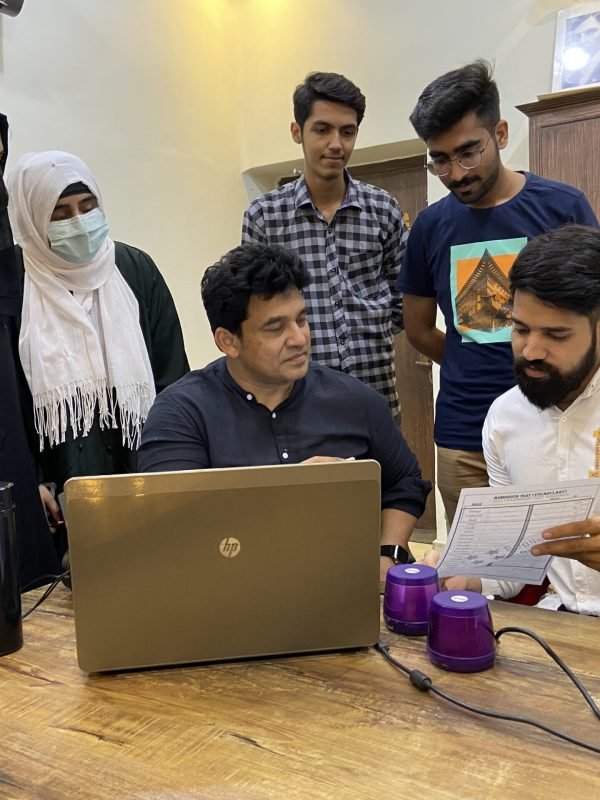
Sir imran and students

Teaching Objectives

  • Equip healthcare professionals with essential English skills for medical settings
  • Enhance fluency, accuracy, and confidence in patient communication
  • Improve documentation writing for reports and referrals
  • Develop strategies to answer different question types effectively
  • Provide an interactive and practical learning experience

Step By Step

our step-by-step method ensures steady progress and maximum results.

Online Conference

Live online Classes with Certified Trainers

Weekly Teaching Plan Overview

Week Focus Area Activities & Strategies
Week 1 Introduction to OET & Test Structure Overview of exam format, scoring system, assessment criteria
Week 2 Speaking Skills – Patient Interaction Role-play, medical dialogues, empathy-building exercises
Week 3 Writing – Letters & Reports Case note analysis, structuring techniques, peer review
Week 4 Reading Comprehension Techniques Skimming, scanning, critical analysis of healthcare texts
Week 5 Listening Strategies & Practice Dictation, note-taking, listening to consultations
Week 6 Mock Tests & Time Management Full-length practice tests, speed drills, score analysis
Week 7 Final Review & Error Correction Targeted practice, revision of weak areas, exam strategies

Week 1: Introduction to OET & Test Format

Objective:

  • Familiarize students with the test format, timing, and scoring.
  • Explain assessment criteria for healthcare communication.

Teaching Methods:

  • Interactive presentation on OET exam structure
  • Group discussion on medical communication challenges
  • Q&A session for clarifying doubts and expectations

Implementation Tip:

Use case studies to explain the importance of effective English in healthcare settings.

Week 2: Mastering Speaking Skills – Patient Interaction

Objective:

  • Improve doctor-patient communication, medical explanations, and empathy.
  • Develop strategies for role-play scenarios and consultations.

Activities:

  • Role-play exercises (doctor-patient interactions)
  • Practicing medical explanations for conditions & treatments
  • Dialogue-building activities to improve fluency

Implementation Tip:

Encourage students to record their conversations for self-analysis and improvement.

Week 3: Writing – Case Notes, Letters & Reports

Objective:

  • Teach effective techniques for medical documentation.
  • Strengthen grammar, coherence, and professional writing skills.

Activities:

  • Step-by-step medical letter-writing workshop
  • Peer review: Students exchange letters and provide constructive feedback
  • Timed writing exercises to improve response speed

Implementation Tip:

Provide real-world patient case notes for practice.

Week 4: Reading Comprehension Techniques

Objective:

  • Enhance reading speed, accuracy, and healthcare-specific vocabulary.
  • Develop strategies for skimming, scanning, and analyzing medical texts.

Activities:

  • Reading patient files & medical research summaries
  • Interactive group discussions on healthcare topics
  • Mind maps for vocabulary-building

Implementation Tip:

Use real medical guidelines & reports for practice sessions.

Week 5: Listening Strategies & Practice

Objective:

  • Improve active listening, note-taking, and comprehension of medical dialogues.
  • Strengthen ability to answer consultation recordings & healthcare discussions.

Activities:

  • Listening to doctor-patient interactions and summarizing key points
  • TED Talk listening challenges on medical topics
  • Fill in the blanks task with audio clips

Implementation Tip:

Use transcripts and annotations to analyze key phrases and grammar structures.

Week 6: Mock Tests & Time Management

Objective:

  • Conduct full-length practice tests under real exam conditions.
  • Train students on efficient time management strategies.

Activities:

  • Timed mock exams (simulating real test conditions)
  • Score analysis sessions (Identifying mistakes & improvement areas)
  • Speed drills for answering questions within time limits

Implementation Tip:

Encourage students to track their progress with performance charts.

Week 7: Final Review & Error Correction

Objective:

  • Identify common errors and refine test strategies.
  • Boost students’ confidence before the final exam.

Activities:

  • One-on-one coaching sessions for weak areas
  • Quick revision flashcards with key concepts
  • Motivational session to ease test anxiety

Implementation Tip:

Use AI speech analysis tools to improve pronunciation and fluency.

Additional Tips for Effective Teaching

  • Use multimedia tools – Interactive videos, AI-powered speech recognition software
  • Encourage peer learning – Group discussions and collaborative tasks
  • Offer personalized coaching – One-on-one feedback sessions
  • Make learning fun – Gamify lessons with quizzes, rewards, and challenges
  • Provide real test experiences – Conduct mock tests in a professional setting
Conclusion

Ensuring OET Success Through Effective Teaching

Teaching OET requires a structured, interactive, and goal-oriented approach. By implementing dynamic teaching methods, engaging activities, and strategic learning techniques, educators can empower students to master healthcare communication efficiently.

With this comprehensive OET teaching plan, students will feel confident and prepared to achieve high scores in their official OET test.

Ready to start teaching OET with impact? Let’s make medical English learning an exciting journey!